Category: Yleinen

  • Heat, cold and damp – why people in China warm their feet before going to bed

    Heat, cold and damp – why people in China warm their feet before going to bed

    In China they say that the older a person is, the more often they should warm their feet before going to bed. Behind this lies one of the most important ideas in Chinese tradition: warmth keeps energy moving – cold and damp bring it to a halt.

    Natural factors: cold, damp, fire and wind

    Damp mist hovering over a conifer forest
    According to tradition, cold and damp are the greatest challengers of the body’s warmth.

    Chinese tradition distinguishes between pathogens (viruses, bacteria) and natural factors, such as cold, damp, heat and wind. Of these, cold is considered the most important – especially together with damp.

    The freezer analogy

    Think of a freezer: first moisture, then frost, and finally a thick layer of ice. According to tradition, the same happens in the body – cold and damp slow the flow of the meridians, and qi and blood begin to “stand still”. That is why warmth is the foundation of everything in yangsheng.

    Tradition also uses this to explain why the body tends to store excess especially around the stomach, lower back, thighs and legs: the lower body is naturally cooler than the upper body.

    Barbecue food and ice-cold fizzy drinks – a vicious circle

    A familiar summer evening: fatty barbecue food and ice-cold drinks. From the traditional point of view, hot fat and a cold drink are a poor combination – the cold “solidifies” the fat. You feel heavy, you get hot, and then you drink more cold drinks and turn the air conditioning up full. You move less and your stomach stretches.

    The way out is not a strict diet but lifestyle discipline: a warm drink with food, a moderate portion and movement after a meal.

    The foot – the body’s “second heart”

    In Chinese tradition, the sole of the foot is called the second heart. It has an abundance of nerve endings and reflex zones, and many meridians begin or end in the feet. When the feet warm up, the warmth spreads throughout the body.

    “The feet are the roots, the legs the trunk.
    As the roots, so the fruit.”

    Seven ways to warm the body in everyday life

    01
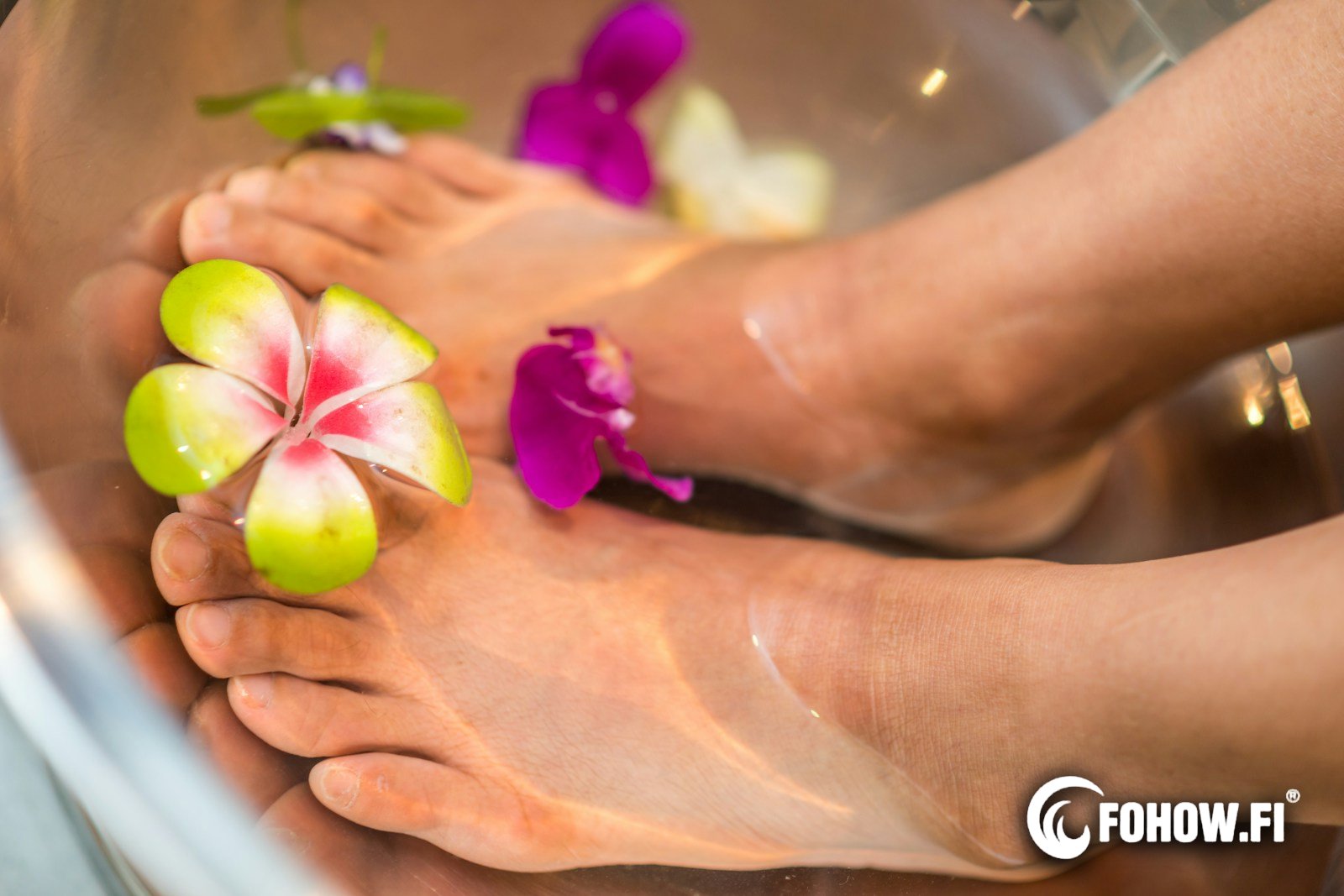
    A warm foot bath in the evening for 15–20 minutes.
    02
    Warm water in the morning and with meals instead of iced water.
    03
    Clap your hands vigorously for a minute – a quick way to warm up.
    04
    Keep your lower back warm – according to tradition, that is where your innate qi resides.
    05
    Choose warm, cooked foods, especially in autumn and winter.
    06
    Move every day – movement generates warmth naturally.
    07
    Massage and heat treatments relax and warm the body deeply.

    Heat treatment with FOHOW devices

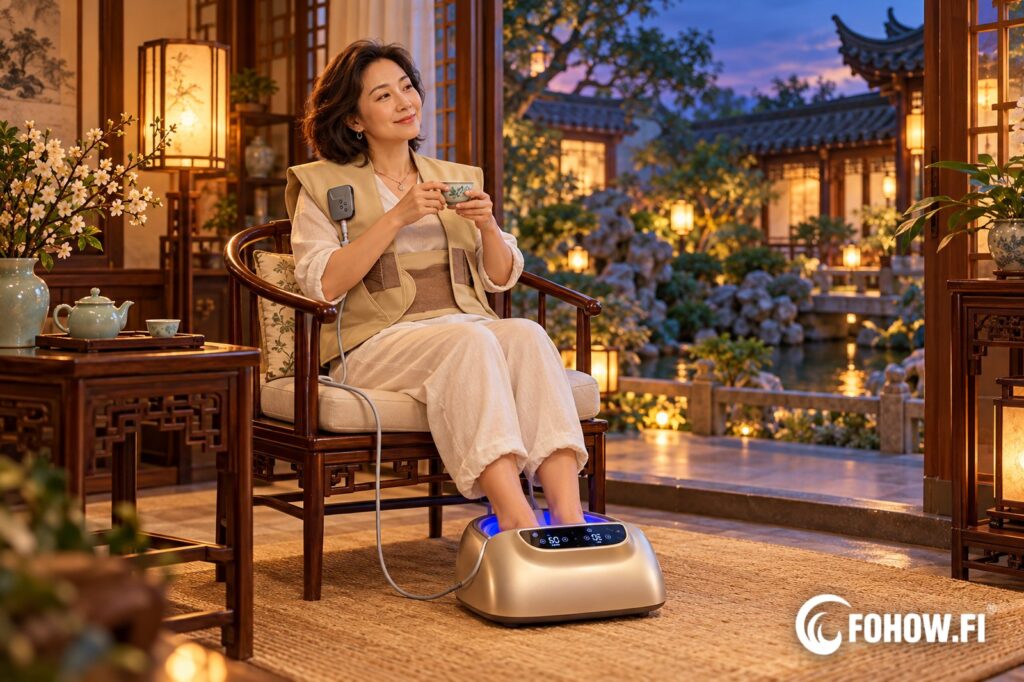
    In FOHOW’s yangsheng line, warmth is a key part of “passive movement”. The FOHOW REM device has a pad for the soles of the feet, as well as a vest and a lower back cushion with graphene-coated infrared heat. The device also has a terahertz and magnetic field function and two EMS programmes, chosen according to how you feel.

    From a massage therapist’s point of view, heat pads are a great help for areas that are difficult to relax by hand alone. You can try heat treatment together with a massage at Hyvinvointikeskus Hoitava Hieronta.

    Always feeling cold?

    Find out your body type and try heat treatment

    Hyvinvointikeskus Hoitava Hieronta, Retkeilijänkatu 13, 00980 Helsinki (Rastila metro station).

    Take the body type test Book an appointment

    Author: Svetlana Kokozina – owner of Hyvinvointikeskus Hoitava Hieronta, qualified massage therapist and FOHOW bioenergy massage therapist

    This article describes the Chinese wellbeing tradition. FOHOW devices are wellbeing devices intended for home use, not medical devices. If you have a medical condition or a pacemaker, or are pregnant, consult a doctor before heat and device treatments.
  • The organ clock – the daily rhythm according to Chinese tradition

    The organ clock – the daily rhythm according to Chinese tradition

    According to Chinese tradition, energy circulates in the body along the meridians in a 24-hour rhythm. Each meridian in turn is “at its strongest” for two hours. This is called the organ clock – and it offers surprisingly practical guidance for everyday life.

    Yang and yin over 24 hours

    Yang is born at midnight and peaks at midday. Yin takes over from midday to midnight. That is why night-time sleep is considered the foundation of everything in the tradition – and why many people feel tired around 11 am–12 noon, as yang turns into yin.

    The meridians run in pairs (lungs – large intestine, stomach – spleen and so on), and the cycle begins with the lungs in the early morning.

    The organ clock hour by hour

    TimeMeridianWhat tradition recommends
    3–5Lungsdeep sleep, calm breathing
    5–7Large intestinewaking up, a glass of warm water, natural bowel movement
    7–9Stomachthe first meal of the day
    9–11Spleen / pancreasa light snack around 10 am – according to tradition, the pancreas “can’t tolerate hunger”
    11–13Heartmidday – yang turns into yin; calming down and rest
    13–15Small intestinelunch around 1 pm
    15–17Bladderdrinking enough, movement
    17–19Kidneysdinner; tradition recommends calcium-rich foods
    19–21Pericardiuma calm evening, loved ones, no heavy food
    21–23Triple burnerin bed by 10.30–11 pm
    23–1Gallbladdersleep
    1–3Liverdeep sleep in complete darkness – according to tradition, the liver “doesn’t like light”

    What is the triple burner?

    In Chinese tradition, the body is divided into three “burners”: the upper (breathing and heart), the middle (digestion) and the lower (lower back and pelvic area). They describe how warmth and energy are distributed in the body.

    A yangsheng day in practice

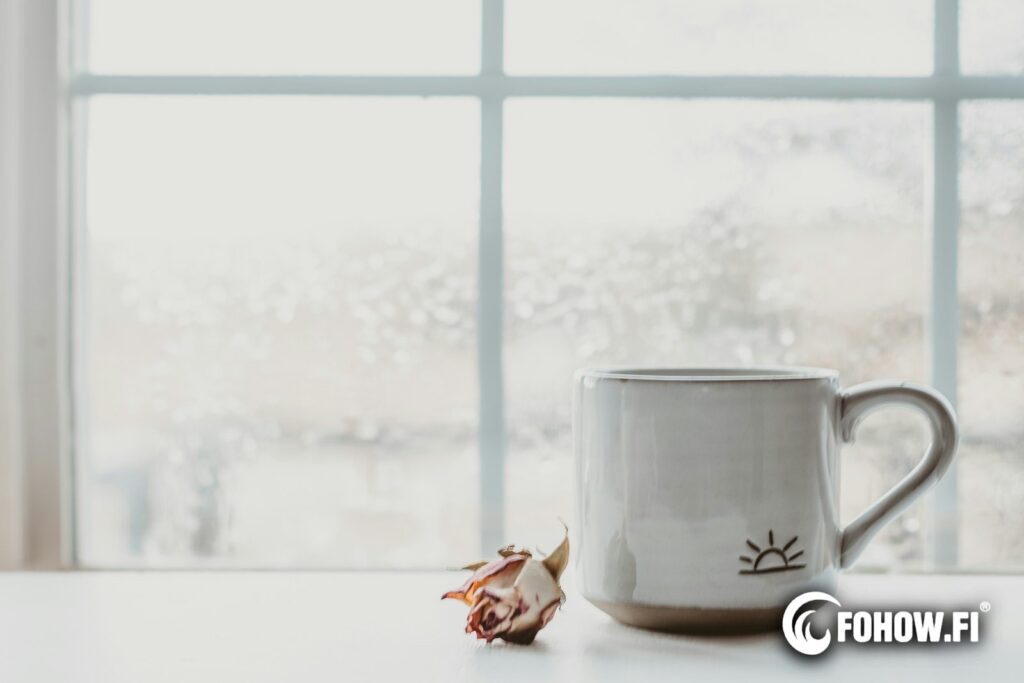
    A warm cup of tea on a windowsill in the morning
    A calm morning and a warm drink – the start of a good daily rhythm.

    6.30  Wake up and have a glass of warm water.

    7.30  A calm, warm breakfast.

    10.00  A light snack or a nourishing drink.

    12.00  A moment to calm down. According to tradition, 12 noon–2 pm is the time for rest, when heat and device treatments are not done.

    13.00  Lunch.

    17–19  Dinner – the last meal at least 3 hours before bed.

    21.30  A warm foot bath, lights dimmed.

    22.30  Bedtime – make the bedroom as dark as possible.

    You don’t have to change everything at once. Start with one thing, for example going to bed earlier – the body gets used to a new rhythm surprisingly quickly.

    Free assessment

    Does your rhythm suit your body type?

    Take the body type test and get tips for your own daily rhythm. Personal assessment: Hyvinvointikeskus Hoitava Hieronta, Retkeilijänkatu 13, 00980 Helsinki.

    Take the body type test Book an appointment

    Author: Svetlana Kokozina – owner of Hyvinvointikeskus Hoitava Hieronta, qualified massage therapist and FOHOW bioenergy massage therapist

    The organ clock describes the Chinese wellbeing tradition. This article does not replace examination or treatment by a doctor.

  • What is your body type? The 9 body types of Chinese tradition

    What is your body type? The 9 body types of Chinese tradition

    In the same weather, one person feels hot and another cold. One eats a lot and doesn’t put on weight; another tries hard and the scales won’t budge. No two leaves on a tree are alike – and neither are people. Chinese tradition explains these differences through body types.

    Qi – life energy, which comes in two kinds

    Innate qi

    Received from our parents. According to tradition, it “resides” in the lower back, around the kidneys – which is why it is worth looking after your lower back throughout your life.

    Acquired qi

    Comes from food, water and air. We can influence it every day – by eating mindfully rather than mechanically.

    The nine body types

    Pure types are rare – most of us have traits of two or three. Do you recognise yourself?

    Body typeTypical traits
    Qi deficiencytires easily, prefers sitting or lying down, takes things hard
    Blood stasisdark patches on the skin, dark lips, slow recovery, reserved nature
    Yin deficiencyinner heat, night sweats, thirst, dry skin
    Yang deficiency – “always cold”cold hands and feet, woolly socks even in summer, can’t stand draughts, loves warm food
    Qi stagnationsensitive to what others say, sighing, dependent on others’ opinions
    Phlegm (damp)little movement, heavy feeling, good-natured
    Damp heatoily skin, heavy feeling, irritability
    Sensitive typesensitive to environmental factors, such as seasonal changes
    Balanced ✦stable weight, good recovery, even mood – the goal of yangsheng

    Towards the balanced type

    A woman sitting on a bench watching the sunset over the mountains
    Balance develops gradually – as body and mind work together.

    Your body type is not a life sentence. In the yangsheng tradition, the aim is to move gradually towards the balanced type. The change does not happen in a week – according to tradition, the shift from one state to another can take as long as six months. That is why crash diets often bring only short-lived results: they do not take your body type into account and do not change your habits.

    The tradition also emphasises the mind: as is the quality of consciousness, so is the quality of the body. Many people train their body but forget their mind. An emotional rollercoaster drains energy just as much as poor food does.

    Three measures of wellbeing according to tradition

    1. Warmth – a warm body is the foundation of the tradition (normal body temperature is 36,5–37,1 °C).
    2. Flow of the meridians – the energy channels through which qi travels.
    3. Movement of qi and blood – qi moves the blood; when they flow, the body feels well.

    Small tips for different types

    • Always cold (yang deficiency): warm drinks, foot baths, keeping the lower back warm.
    • Qi deficiency: regular sleep, calm movement, warm and nourishing food.
    • Blood stasis: movement, drinking enough and energetic company.
    • Phlegm and damp heat: less ready-made and fatty food, more movement.
    • Qi stagnation: movement, breathing, talking things through – and a moment for yourself.

    Free body type test

    Find out your body type in a few minutes

    You get your result straight away, along with lifestyle tips for your type. If you wish, you can book a personal assessment at Hyvinvointikeskus Hoitava Hieronta, Retkeilijänkatu 13, 00980 Helsinki.

    Take the body type test Book an appointment

    Author: Svetlana Kokozina – owner of Hyvinvointikeskus Hoitava Hieronta, qualified massage therapist and FOHOW bioenergy massage therapist

    Body types describe the Chinese wellbeing tradition; they are not medical diagnoses. This article does not replace examination or treatment by a doctor.

  • Yangsheng – the art of nourishing life

    Yangsheng – the art of nourishing life

    The Chinese word yangsheng means “nourishing life”. It is not a diet or a cure, but a way of life: an active, balanced, joyful and voluntary way of taking care of yourself – today, not tomorrow.

    Care, attention and self-respect

    The key words of yangsheng thinking are care, attention and respect for yourself. According to tradition, the world responds to us in the same way that we treat ourselves. The past is experience and a lesson to be grateful for – but your own wellbeing is taken care of right now.

    The idea rests on the fundamental concepts of Chinese tradition: the balance of yin and yang and the theory of the five elements (wu xing).

    The three pillars of yangsheng

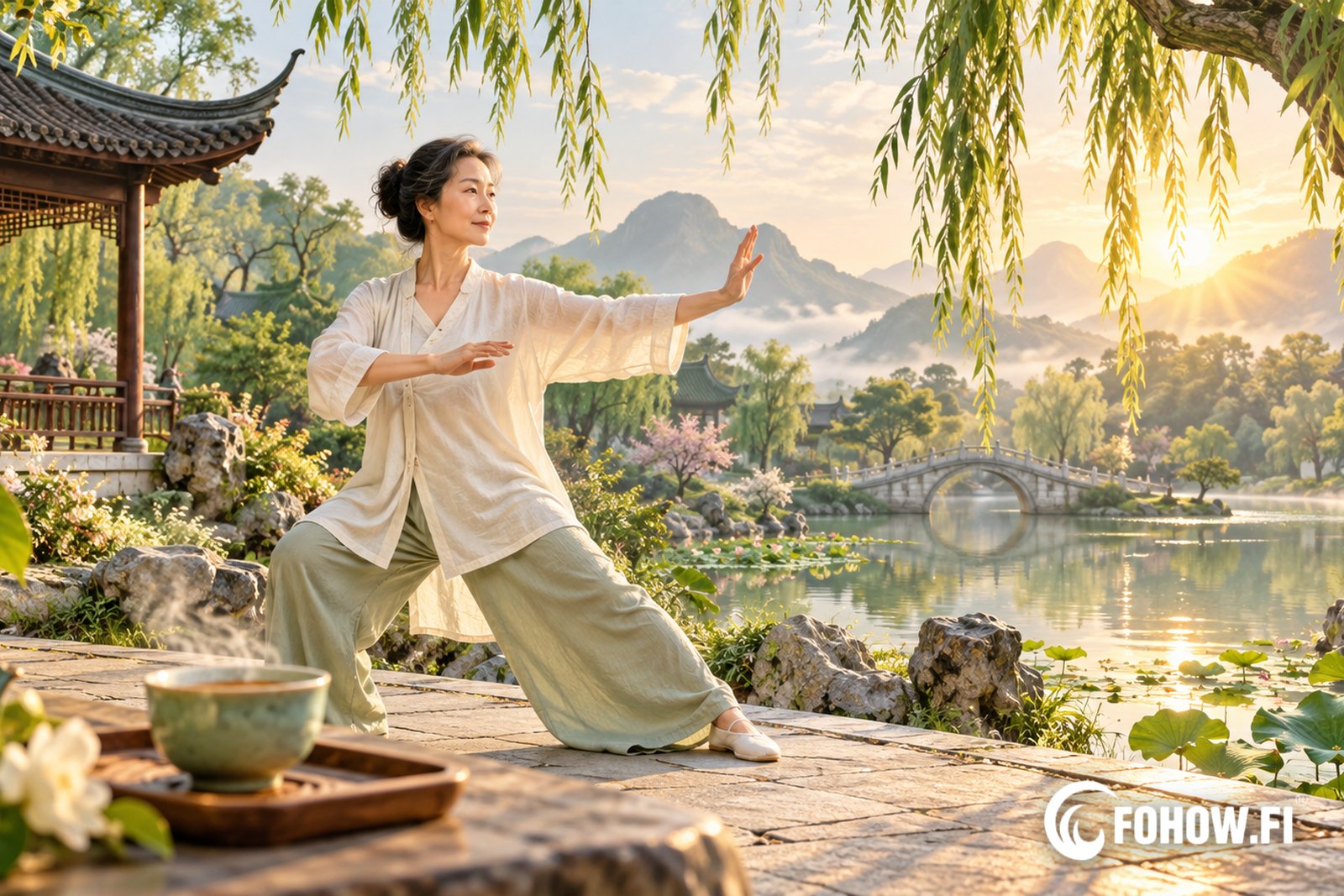
    Stretching, a healthy meal and a calm moment by a lake
    Movement, nutrition and state of mind – the three pillars of yangsheng.

    1 · Movement

    Active: exercise, dancing, morning stretches.
    Passive: warmth, massage and other treatments that relax the body.

    2 · Nutrition

    High-quality “building material” for the body. Food is eaten mindfully, not mechanically – and according to your own body type.

    3 · State of mind

    Accepting what has happened and the skill of seeing the plus in the minus. Joy gives positive energy.

    When energy flows without stagnation, according to tradition, wellbeing extends to both body and mind. That is why yangsheng never focuses on just one area.

    Yin and yang – a lifelong balancing act

    Yang represents active, warming energy and yin calming, cooling energy. Each has its rise and its decline, and each contains a small part of its opposite. According to Chinese thinking, the task of life is to keep them in balance – not to eliminate one, but to give both their own place.

    The five tasks of nutrition

    Yangsheng nutrition speaks of five functions that run in parallel:

    TaskIdea
    Lighteninglighter meals and pauses between meals
    Dissolvingletting what has stagnated “move”
    Renewalsupporting the body’s own recovery
    Replenishmentgiving the body what it needs
    Balancingthe centre of everything – harmony

    In the tradition, balancing is described as an axis around which lightening and replenishment alternate daily. The most important thing is to notice quickly when life tips too far in one direction – and to return to the centre.

    A woman relaxing with a cup of tea and enjoying a heat treatment with FOHOW devices
    The golden hour – a moment of warmth and peace just for you.

    The golden hour

    In the yangsheng tradition, time for yourself is called the “golden hour”. It is not a reward earned after all your other tasks, but the foundation of the day. Those who are ready come; those who are not look for excuses.

    Five small steps towards yangsheng

    1. Drink warm. Start the morning with a glass of warm water and avoid ice-cold drinks with meals.
    2. Move every day. Even a little movement keeps energy flowing – walking, stretching or dancing at home.
    3. Respect the daily rhythm. Go to bed by 10.30–11 pm. Read more in the article The organ clock.
    4. Eat mindfully. Pause for your meal and stop when you are 70–80% full.
    5. Book your golden hour. A moment each day just for yourself – a warm foot bath, a massage or silence.

    Wanting without energy changes nothing – but real desire is full of energy and leads to action. Yangsheng begins with one small decision.

    Free assessment

    What is your body type?

    Take the short body type test and get lifestyle tips for your type. You can also book a personal assessment at Hyvinvointikeskus Hoitava Hieronta, Retkeilijänkatu 13, 00980 Helsinki.

    Take the body type test Book an appointment

    Author: Svetlana Kokozina – owner of Hyvinvointikeskus Hoitava Hieronta, qualified massage therapist and FOHOW bioenergy massage therapist

    This article describes the Chinese wellbeing tradition and does not replace examination or treatment by a doctor. If you have health problems, please consult a healthcare professional.